Whoda thunk it? Three eager buyers bid up Sir Lawrence Alma-Tadema's "The Finding of Moses" to $35.9 million last week at Sotheby's, about ten times its low estimate. In other words, it outsold every other artwork auctioned in New York last week except for the $68.9 million Modigliani at Sotheby's and the Matisse "Back IV" at Christie's ($48.8 million).
Proof positive that a readiness to admire art of disfavored styles is not a victory for enlightened taste?
Sotheby's was apparently so astounded that its press release announcing the sale mistakenly described the painting as a "19th-century masterpiece." "Moses" was painted in 1904.
"Moses" was an inspiration for Cecil B. DeMille, and it had been owned by TV personality Alan Funt, so it wouldn't be surprising if the anonymous buyer turns out to be some studio bigwig. We already know that George Lucas and Steven Spielberg are big Norman Rockwell collectors, so "Moses" would fit right in.
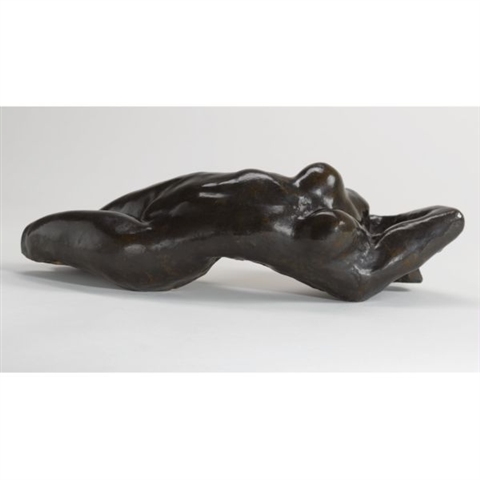
Another artwork that exceeded its estimate by a factor of 10: Rodin's small 17.5-inch long "Torse d'Adele," even though it wasn't cast until 1955. What can we say? Sex sells.
Monday, November 8, 2010
Thursday, November 4, 2010
Can Bank of America Atone Through Art?
Andrew Mellon did it with the National Gallery. J.P. Morgan did it with the Metropolitan Museum.
Can Bank of America atone through art?
Let's review just some of what BofA needs to atone for: Taxpayer bailout of $45 billion necessitated in great part by its own nefarious conduct. Continued, under-the-radar taxpayer subsidies in the form of near interest-free loans from the Fed. Fraud allegations concerning its acquisition of Merrill Lynch-- settled with the SEC for a $150 million fine but with an investigation and charges still active in New York State.
And then there are the fraudulent mortgage documents it's been submitting to the courts and the $141.6 billion in home-equity loans on the books, which, when their true value becomes known, may require another huge taxpayer bailout.
So what's a bank to do to make things good again with taxpayers, the jobless, and retirees whose savings evaporated? If you're BofA, you piss away money on arts projects overseas.
In 2008, when it was driving the economy over the cliff, BofA initiated "Art in Our Communities," under which it organizes pre-curated shows from its multimillion-dollar art collection.
Currently on view -- in Paris -- is a photography show at the Mona Bismarck Foundation. Just closed -- in London -- 60 paintings by the Wyeths at the Dulwich Gallery. Opening spring 2011-- in Dublin -- an exhibit of Matisse books.
When I visited the Bronzino show -- in Florence -- I noticed several paintings had been restored by something called the "Bank of America Merrill Lynch Art Conservation Programme." BofA initiated this program in 2010 to fund art conservation in Europe, the Middle East, and Africa. How many taxpayers do you know who are going to be visiting the Szepmuveszeti Museum in Budapest to see Bronzino's restored "Allegory of Venus, Cupid, and Jealousy" (above right)?
BofA provides funding for the biggest art prize -- in the U.K. And so on.
Where does the money come from? Bank of America is insolvent -- it has no money of its own to spend -- so I guess it comes from you and me.
(Top image, detail, "Bailout Bill," Copyright 2009 Laura Gilbert.)
Can Bank of America atone through art?
Let's review just some of what BofA needs to atone for: Taxpayer bailout of $45 billion necessitated in great part by its own nefarious conduct. Continued, under-the-radar taxpayer subsidies in the form of near interest-free loans from the Fed. Fraud allegations concerning its acquisition of Merrill Lynch-- settled with the SEC for a $150 million fine but with an investigation and charges still active in New York State.
And then there are the fraudulent mortgage documents it's been submitting to the courts and the $141.6 billion in home-equity loans on the books, which, when their true value becomes known, may require another huge taxpayer bailout.
So what's a bank to do to make things good again with taxpayers, the jobless, and retirees whose savings evaporated? If you're BofA, you piss away money on arts projects overseas.
In 2008, when it was driving the economy over the cliff, BofA initiated "Art in Our Communities," under which it organizes pre-curated shows from its multimillion-dollar art collection.
Currently on view -- in Paris -- is a photography show at the Mona Bismarck Foundation. Just closed -- in London -- 60 paintings by the Wyeths at the Dulwich Gallery. Opening spring 2011-- in Dublin -- an exhibit of Matisse books.
When I visited the Bronzino show -- in Florence -- I noticed several paintings had been restored by something called the "Bank of America Merrill Lynch Art Conservation Programme." BofA initiated this program in 2010 to fund art conservation in Europe, the Middle East, and Africa. How many taxpayers do you know who are going to be visiting the Szepmuveszeti Museum in Budapest to see Bronzino's restored "Allegory of Venus, Cupid, and Jealousy" (above right)?
BofA provides funding for the biggest art prize -- in the U.K. And so on.
Where does the money come from? Bank of America is insolvent -- it has no money of its own to spend -- so I guess it comes from you and me.
(Top image, detail, "Bailout Bill," Copyright 2009 Laura Gilbert.)
Monday, November 1, 2010
Picasso's Record-Breaking $2 Million Print Flops at Sotheby's
Sometimes multiples just don't repeat.
Picasso's "Minotauromachie," one of which set a record at $2 million for a single print sold at auction in London in September, remained in the hands of its anonymous Tokyo owner when Sotheby's failed to sell it in New York this weekend.
What's the London buyer thinking now?
No new homes, either, for some other prints that Sotheby's featured: Jasper Johns's "Black Numeral Series"; two prints by Degas, including one of Mary Cassatt at the Louvre; and Warhol's double Mickey Mouse (though 40-some other Warhols garnered more than $2 million total; it's still a Pop Art world).
And Munch's "Vampire" sold for way, way below -- about one-third below -- its low estimate of $1.5 million, which makes one wonder whether reserves aren't well below the estimates these days.
So there were some problems at the upper end.
At the bottom end of the market, there were some nice reminders that prints permit people who aren't superrich to own real art, even though here too this was sometimes the result of works selling below their low estimates. Two Kandinsky's for example, each found buyers at less than their $5,000 low estimates.
A Picasso "Salome," a print seen at MoMA last spring, went for $10,000 with buyer's premium; that means that without the premium, the winning bid was $8,000, which is one-third less than the $12,000 low estimate. A number of late Picasso prints, some from his "347" series also exhibited at MoMA, were estimated from around $5,000 to $10,000, the winning bids tending to hover around the low end or below.
The Picasso shown here, "Un Couple d'Amateurs" from 1966, went for $4,000 without the buyer's premium, 25% below the low estimate of $5,000.
Has the economy stabilized? The print market hasn't.
Picasso's "Minotauromachie," one of which set a record at $2 million for a single print sold at auction in London in September, remained in the hands of its anonymous Tokyo owner when Sotheby's failed to sell it in New York this weekend.
What's the London buyer thinking now?
No new homes, either, for some other prints that Sotheby's featured: Jasper Johns's "Black Numeral Series"; two prints by Degas, including one of Mary Cassatt at the Louvre; and Warhol's double Mickey Mouse (though 40-some other Warhols garnered more than $2 million total; it's still a Pop Art world).
And Munch's "Vampire" sold for way, way below -- about one-third below -- its low estimate of $1.5 million, which makes one wonder whether reserves aren't well below the estimates these days.
So there were some problems at the upper end.
At the bottom end of the market, there were some nice reminders that prints permit people who aren't superrich to own real art, even though here too this was sometimes the result of works selling below their low estimates. Two Kandinsky's for example, each found buyers at less than their $5,000 low estimates.
A Picasso "Salome," a print seen at MoMA last spring, went for $10,000 with buyer's premium; that means that without the premium, the winning bid was $8,000, which is one-third less than the $12,000 low estimate. A number of late Picasso prints, some from his "347" series also exhibited at MoMA, were estimated from around $5,000 to $10,000, the winning bids tending to hover around the low end or below.
The Picasso shown here, "Un Couple d'Amateurs" from 1966, went for $4,000 without the buyer's premium, 25% below the low estimate of $5,000.
Has the economy stabilized? The print market hasn't.
Hirst Out, Anatsui In
At last, Ghana-born El Anatsui gets to sit at the adult's table: His work has been on view at the Metropolitan Museum for almost three years, but only now is it being shown where it belongs, in the contemporary art gallery (above).
Out of Africa
The Met introduced its first Anatsui purchase, "Between Earth and Heaven," in early 2008. It's a beautiful piece made with his signature bottle caps and other detritus. At the time, the Met hailed the artist as "the most important contemporary African sculptor," an assessment hard to argue with. He'd been the star of the most recent Venice Biennale, and he was then and is now handled in New York by top-flight contemporary gallery Jack Shainman. His work is in the collections of the Centre Pompidou and MoMA, among others, which specialize in modern and contemporary art.
But when the Met installed the piece, it was hung not in the contemporary gallery but in a space devoted to the arts of Africa, which is mostly filled with anonymous ceremonial objects or objects made for the tourist trade. I haven't read every wall label there, but I'd guess that "Between Earth and Heaven" (original installation, above left) is the only work with a title and an artist's name attached to it, let alone an artist who is also a university art professor and lauded as an art star.
However strong Anatsui's connection to traditional African art, it seemed he was being marginalized. There was the obvious comparison with how the Met treated the white South African William Kentridge -- when it displayed his drawings in 2005, they were in a space devoted to temporary exhibitions of modern and contemporary art.
A Global Vision
It also seemed that the Met was abdicating a responsibility to take the lead in writing art history in an era of globalization. If it bought a painting by hot contemporary Chinese artist Yue Minjun, would it be shown ethnographically, among Chinese vases and tomb sculpture, or with contemporary art?
About Anatsui's place we need worry no longer. The Met acquired a second Anatsui, "Dusasa II," and when Damien Hirst's $8 million shark left the Met's contemporary art gallery to return to hedge funder Steve Cohen a couple of months ago, "Dusasa II" was one of the works that took its place. It's quite at home amid pieces by Anish Kapoor (born in India, living in London), Clinton Menezes (Portuguese, born in South Africa), Mouir Shahroudy Farmanfarmaian (Iranian), and Liza Lou (American). (Two additional gallery views are shown here.)
"Between Earth and Heaven" is still in the African arts gallery, but now hidden behind a temporary wall (left). Show one Anatsui, hide another?
Out of Africa
The Met introduced its first Anatsui purchase, "Between Earth and Heaven," in early 2008. It's a beautiful piece made with his signature bottle caps and other detritus. At the time, the Met hailed the artist as "the most important contemporary African sculptor," an assessment hard to argue with. He'd been the star of the most recent Venice Biennale, and he was then and is now handled in New York by top-flight contemporary gallery Jack Shainman. His work is in the collections of the Centre Pompidou and MoMA, among others, which specialize in modern and contemporary art.
But when the Met installed the piece, it was hung not in the contemporary gallery but in a space devoted to the arts of Africa, which is mostly filled with anonymous ceremonial objects or objects made for the tourist trade. I haven't read every wall label there, but I'd guess that "Between Earth and Heaven" (original installation, above left) is the only work with a title and an artist's name attached to it, let alone an artist who is also a university art professor and lauded as an art star.
However strong Anatsui's connection to traditional African art, it seemed he was being marginalized. There was the obvious comparison with how the Met treated the white South African William Kentridge -- when it displayed his drawings in 2005, they were in a space devoted to temporary exhibitions of modern and contemporary art.A Global Vision
It also seemed that the Met was abdicating a responsibility to take the lead in writing art history in an era of globalization. If it bought a painting by hot contemporary Chinese artist Yue Minjun, would it be shown ethnographically, among Chinese vases and tomb sculpture, or with contemporary art?
About Anatsui's place we need worry no longer. The Met acquired a second Anatsui, "Dusasa II," and when Damien Hirst's $8 million shark left the Met's contemporary art gallery to return to hedge funder Steve Cohen a couple of months ago, "Dusasa II" was one of the works that took its place. It's quite at home amid pieces by Anish Kapoor (born in India, living in London), Clinton Menezes (Portuguese, born in South Africa), Mouir Shahroudy Farmanfarmaian (Iranian), and Liza Lou (American). (Two additional gallery views are shown here.)"Between Earth and Heaven" is still in the African arts gallery, but now hidden behind a temporary wall (left). Show one Anatsui, hide another?
Wednesday, October 27, 2010
Artist Day Jobs: Barber, Baker, Beer-Maker
"Artists rarely had a chance of large-scale public commissions and hardly any possibility of salaried employment. Consequently the art market was flooded with small easel paintings, prices were mostly ridiculously low, competition was fierce."
Sound familiar? This is Margot and Rudolf Wittkower -- he's one of the great 20th-century art historians -- writing about 17th-century Dutch artists in their book Born Under Saturn.
Rembrandt and Vermeer supplemented their income with picture dealing, but many painters -- well- known names among those who have spent any time looking at Dutch art and some of the best of the "little masters" -- had occupations wholly at variance with being an artist.
The Wittkowers again:
"Jan van Goyen dealt in real estate and tulips, Aert van der Neer owned an inn in Amsterdam, Jan Steen a brewery in Delft and an inn in Leyden; Jan van de Cappelle carried on his father's dyeing business; Jacob Ruisdael was a barber-surgeon and Joost van Craebeeck a baker; Philips Koninck owned a canal-shipping company and Hobbema held an appointment as a gauger of imported wine."
Artists are often asked, "Do you make a living at that?" Day jobs -- they come with the territory whenever supply greatly exceeds demand. This is quite aside from the fact that most of the art out there isn't worth a damn.
Sound familiar? This is Margot and Rudolf Wittkower -- he's one of the great 20th-century art historians -- writing about 17th-century Dutch artists in their book Born Under Saturn.
Rembrandt and Vermeer supplemented their income with picture dealing, but many painters -- well- known names among those who have spent any time looking at Dutch art and some of the best of the "little masters" -- had occupations wholly at variance with being an artist.
The Wittkowers again:
![]() |
| Steen, brewer-inn keeper |
![]() |
| Ruisdael, barber-surgeon |
Sunday, October 24, 2010
New Mengs at the Met
If you've been dissed for two centuries, is there any hope for your reputation?
In a quiet move, the Metropolitan Museum has hung, unannounced and unsung, a new acquisition, a late self-portrait by Anton Raphael Mengs dated 1776. It's catty-corner to another Mengs, his portrait of the archaeologist/art historian Johann Joachim Winckelmann.
The self-portrait's a stunner. The figure has an imposing presence, enhanced by the simple, broad areas of color; his smallish eyes and steady gaze give him great individuality; and the harsh light that emphasizes the bumps on his forehead -- they could so easily have been left out -- imply a kind of courageous stance of artist against the world.
Mengs (1728-79) was perhaps the most famous artist of his time. He provided the pictorial example, and Winckelmann the theoretical underpinnings, for the radical turn to Neo-Classicism. The revolution started with them, in Rome, and then spread throughout Europe.
But who has heard of Mengs now? Judging from this beautiful new acquisition, it may be time to take another look.
In a quiet move, the Metropolitan Museum has hung, unannounced and unsung, a new acquisition, a late self-portrait by Anton Raphael Mengs dated 1776. It's catty-corner to another Mengs, his portrait of the archaeologist/art historian Johann Joachim Winckelmann.
The self-portrait's a stunner. The figure has an imposing presence, enhanced by the simple, broad areas of color; his smallish eyes and steady gaze give him great individuality; and the harsh light that emphasizes the bumps on his forehead -- they could so easily have been left out -- imply a kind of courageous stance of artist against the world.
Mengs (1728-79) was perhaps the most famous artist of his time. He provided the pictorial example, and Winckelmann the theoretical underpinnings, for the radical turn to Neo-Classicism. The revolution started with them, in Rome, and then spread throughout Europe.
But who has heard of Mengs now? Judging from this beautiful new acquisition, it may be time to take another look.
Friday, October 22, 2010
Kiki on Her New Perfume: "Smells Like Cat Pee"
Which one is money quote: "It's complete narcissism" or "smells like cat pee"?
Both are attributed to Kiki Smith in a short article about her new perfume "Kiki" -- mentioned in Monday's post "Art Whore Chronicles" -- that appears in W magazine's November issue, whose cover features a naked Kim Kardashian and the fitting title "It's all about me."

To be fair, when Smith says "smells like cat pee," she's referring not to "Kiki" but to its main component, boxwood, of which she also says, "A lot of people find it revolting, but I love it."
Both are attributed to Kiki Smith in a short article about her new perfume "Kiki" -- mentioned in Monday's post "Art Whore Chronicles" -- that appears in W magazine's November issue, whose cover features a naked Kim Kardashian and the fitting title "It's all about me."
To be fair, when Smith says "smells like cat pee," she's referring not to "Kiki" but to its main component, boxwood, of which she also says, "A lot of people find it revolting, but I love it."
Subscribe to:
Posts (Atom)


